As some of you were made aware in my interview of Shana from Tourism Queensland, I am chatting with some of the EyeForTravel speakers for the upcoming Travel Distribution Summit North America in Chicago this October 2010. The interviews are not only meant to be insight into the world of social media, mobile, and modern technology’s impact on the ever-changing landscape of the hospitality and travel business – but a dialog to help one another answer questions, as well as help get new ones asked. These interviews aren’t necessarily light reading – these are the people at the top of our profession taking the rare chance to go in depth into some very heady and complex issues.
EyeForTravel has long been the go to source for travel news, events, and analysis, and are experts at bringing some of the most intelligent and thoughtful minds, as well as conversation, into the overall discussion of hospitality & travel. Hopefully, this conversation between Susan and I will add to that pool of information. Â In fact, I don’t see how it cannot because if there is one true, legitimate and *bona-fide* professional who can use the word “guru” without sounding like a spammy internet marketer…. it’s going to be Susan Black.
Of course, many of you know Susan, of Black & Wright. Â She is tireless, relevant, and, if you have been following the world of travel news and discussion, a name that is, and should be, hard to miss. Â Her twitter account, @SusanTravels aggregates some of the best information in the industry, all the while working with clients on long and short term projects, planning and attending conferences, keeping up to date on current events, managing a hectic but rewarding professional and personal life…. as well as even taking time out for the likes of me.
That’s unbelievable, and it’s quite the honor to have her time and bend her ear. Our interview was incredibly casual, friendly, and meandering, while still focused on the issue at hand – What in the heck is going on with travel, tech, social media, and our industry! Susan had a lot to say… now it’s up to all of you to listen! If you aren’t sure who she is, the picture, after the jump, should remind you!
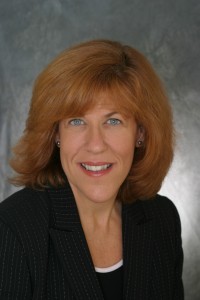
Robert Cole called you “The Ubiquitous Susan Black”, in that you are, literally, in as many places as your name is. Â You are a rare gem in our world – in that you have a solid professional history in travel, so within social media, you aren’t just some newcomer with no perspective (all too common nowadays). Â It’s refreshing to have learned, long time industry pros using social media instead of just another “guru” spouting noise. Tell us a little about your history in travel, prior to being engaged in this new world communication.
“I have been in the industry for a very long time – and I always hesitate when I give how long long because people immediately begin to think I am Methusleah.  But I have been in travel, starting in travel publishing, since back in the early 80s. So it’s been a really long time, almost 30 years; I didn’t spring from this ‘full blown and fully grown’.  I went through the more traditional travel route of working as a publisher for travel trade publications for many years, and getting to know the travel industry and their issues and their challenges, particularly with distribution, both on b2b [business to business] and b2c [business to consumer] side, from a number of different clients’ perspective.  First it was the corporate travel arena, I worked in news  magazine and corporate travel magazine.”
That is about when you entered into the online world?
“I switched over in the early 90’s to the leisure side, that was going through tremendous changes at that time, mainly the shift over from travel agents and more traditional types of distribution to the very, very early days of online. As a matter of fact, my first website was launched in 1994, which was called VacationPackager.com, right after the floppy discs and all that stuff. I was like, ‘WOW the internet, that’s kind of cool’.”
“Vacation packager took the database from the official tour directory that I was publishing, and took this relational database, and if you wanted to know about vacation packages like golf tours in Scotland or fishing tours in Costa Rica, it would tell you about the company, and give you all sorts of background info on the company – it was early, early search, pre-everything.  We sat on the homepage of  Travelocity – we actually preceded that site – but we sat on their homepage as a vacation package button for about 2 years, and did about 6 or 7 iterations of vacationpackager because we finished one we would say ‘No NO!.. what they really want to know is the itinerary.  No NO! They want they really want to know is comparisons, pricing, can you book it?’  We would do partnerships with a lot of tour operators and things, so it was quite a learning experience in a very short period of time.  From coming up with my first flying GIF thing ‘ooh look at that, the plane flies! How cool is that?’, to user, early days of usability and we started off as an advertising vehicle. There was no such thing as performance based, there was no such thing as search, there was no such thing as CPC, there was no such thing as anything.  I know I sound like the dark ages.”
Why did you get online so quickly, so early in the game? Â Why were you so ahead of the curve?
“I loved it. I saw so much promise there. Remember, I worked for a relational database, a directory. You can’t get really sexy with a directory, but their really useful. And then to have all that information and sorted online, it was exciting. But yes… it was the day of the dialups, and it was the day of.. we had bandwidth issues.  I remember we had conversation about disabling the “back button” [We both laugh]
Sounds like you were a voracious “sponge”?
“I learned about it early on, and I learned it from someone who knew quite a bit in travel [professional friend of Susan’s to remain anonymous]. Â IÂ went to every single early show at the time; there weren’t many – Â Jupiter had something, and Forrester had something. Whatever was around, I went to, I read *EVERYTHING*. Â I kind of ran in circles like Rich Barton and Terry Jones, and all the early pioneers – it was a small circle…. A tiny little cirle. Â We all kind of banded together – mainly the OTAs; the hotels weren’t really on board at this point. Â PCTravel, BizTravel; just a lot of people that aren’t around anymore. Â But it was a really interesting and exciting period. Â Now, I was interested, not so much in the e-commerce point of view, but the power of an advertising point of view – that it was very targeted, that there was a lot of intent. Â Again this was pre google, pre search, pre everything.”
“So that is kind of my background on all of this. Â At the same time Eye For Travel started, back in 1999, I started my consulting practice, and started “E-Travel World” as part of a larger vision of intersecting industry and the internet, part of adtech, e-healthcare world, e-auto world, e-b2b – you kind of get the picture. That is when I first started with Forrester Research – first with Mari Moto, then with Henry Harteveldt and it’s when I first got to know the significant players and all the new applications in online travel in an intimate way because I needed to program them, and really needed to understand the differentiators and understand what they did.”
Hotels have always gotten beat up with tech. We are always 10 years behind: from updating property management or telecom systems (remember installing wifi, everyone?), to the early online days where most of us missed the boat with SEO; and now in our current state where we  struggle with branding and messaging in a climate that has the consumer model flipped.  Even some Travel Agent Publications are still trying to figure out how they missed that boat that sailed so long ago.  It seems more and more that knowing about the tech isn’t enough, and how to handle and integrate the tech is just as important as understanding the technology’s importance or existence.  Did you find that immersing yourself in this world of new contacts and applications, as well as being able to immediately practically apply them, sped up your understanding of their impact?
“Because I had a consulting practice at the same time, I was able to integrate and apply the new fangled applications to the needs of my clients. Â It really was a terrific platform, and a way to learn about all these new things, crazy things like “search”. Â I mean, as I said I read everything, went to a tremendous amount of conferences – I drank the Kool Aid. I mean – this will really date me – I remember when I saw the first business fax that came through. I was like “Oh my God it’s Star Trek, it’s Buck Rogers, it’s everything’. Â So I always believed in what was next – that there will be a next, and that there were applications out there that would be exciting – even if it wasn’t adapted completely at the time, but that this is such a powerful tool – especially as bandwidth grew and it became easier. Â At first, I saw that people were going on online chat rooms, and AOL chat. I was like ‘damn, everyone is going to these places’. Â People were spending hours and hours abandoning TV and bars to sit online and participate in this interactive content. Â That interactive content got me excited… I couldn’t believe I could chat with someone about a topic that was interesting to me with someone around the world.”
“Now, with the transition and movement to more transparent social media – I know now who these people are, I have met them person to person, face to face, or met them through someone trustworthy, it takes on a whole new dimension. I know who I am getting my information from, and I won’t end up quoting some oddball.”
And you don’t always need to know them, because some of these sites hold these transparent profiles that provide a little veracity and relevancy. Not as scary as the old anonymous days of the web…
“This comes with more of a linkedin, and more of a contextual conversation. Â If within LinkedIn there is a conversation about distribution, or revenue management, that is relevent. Â They may be people I don’t know, but when we belong to the same group and talk about contextually relevant information – I don’t necessarily need to know them, but if they belong to the same group or membership but we’re talking the same contextually relevant information.”
“With Twitter, again, the last word there is contextual and relevant. You look for the relevancy – I use it as an uber editing force. Â Here’s a whole bunch of people who are interested in the same thing, in this case online travel, as I am, and they have the time to edit things so to say, ‘You may be interested in reading this, or you may want to see this you may have missed’, Â and it may be someone you may not know personally, but it’s someone big in the industry. Â So I find it as one big ole whopping editing opportunity for me, and that’s the value I see there. Â And the value of conversation, but again I use it more in terms of ‘I would have missed that, thank you for bringing it to my attention.”
“Let’s say I have a subject like the recent acquisition of ITA by Google.  I can read what’s in the press, everyone can.  But there are some industry leaders who’s point of view I might specifically like.  I have a choice – I can call them up, that will take about 16 years if i could ever get them.  I could send an email; equally — they are busy, so am I.  I can maybe google them and maybe they have written something, or not.  And how many am I going to do for that.. 10, 20 30? Well that’s going to take all day, or year, or forever?  Or maybe I can join a conversation by putting in “ITA Software”, see what pundits have put something there, links to their blog and pick and choose what to look at, all in about 3 1/2 minutes.  I find it useful to get relevant, contextual information from sources I may or may not now that I do trust that have things to say that I may have missed.”
“Really, the strongest application to my world with Twitter is in relation to conferences.”
I have been blown away by twitter and conference usage. Â You have people live reporting, you have other people commenting, contrarians yammering (like myself), even light hearted banter as people get slap happy near the end of the day. Â It adds so many dimensions to conferences.
“It forges new relationships and contextual relationships.  How many times have you been at conferences and … sitting next to someone at lunch you *may* talk to someone, or sitting next to someone you *may* chat, or find the badge of a company you really want to engage with – but what are the chances that you could really form a deeper understanding of someone’s views?  Things you very probably would have missed from people you probably didn’t know you needed to know.  It helps connect people that I need to know.  This is how I morphed into it – it’s not linear. It’s a whole amalgam of different experiences of the travel industry, past present and future.”
How do you think the traditional travel background has faciliated your understanding of the online channel?
“What’s unique about where I am in the industry and with my development, is that – and there aren’t many of us, and I’m not bragging, but it’s just kind of an observation – there aren’t that many that came from a traditional travel background. There are almost no more suppliers, or in my case publishers, who dealt B2B in travel that knew *that* world pre-internet – pre-1995 – as intimately and played in that area *and* as actively as the “post beginning of internet” group. They *may* have just been in a different place early on – online advertising, etc. Not specifically tied to travel, just in a different place. There are few people who have come from traditional travel backgrounds who have immersed themselves as I have in this “online space”.  I am in this very bizarre position where I know people, and I maintain my contacts very actively with people from.. you know.. the 80’s, the 90’s; then I have this whole new group of folks I have known from the late 1990’s to today.  The first 15 and the last 15!”
It’s old world versus new world.  There is an obvious crisis of experience with modern travel professionals.  There are so many people saying they have experience in travel and the industry, marketing or hospitality, when they don’t really have a frame of reference to the industry, how it works, etc.  Sitting on twitter doesn’t necessarily make someone an expert.  So we need people like you to stand out. I hope I help.
I had the social media bug in me before the tools were around. Â It was something called a rolodex.
Hey, I remember those. Â I remember management hiring people they didn’t like just because of their Rolodex. Â It’s still fairly powerful.
“Yeah I had a pretty powerful Rolodex – I even remember using the early Plaxo tech, and tools so you could scan business cards in, and leverage as much as you could off of those cards. Â But yes, I have been a big, BIG believer of true, I will call it applied, networking. It isn’t enough to have a Rolodex, but it’s what you do with those connections – how you monetize it, how you use it, how do you partner with it, and understand and leverage those relationships. Â It’s ‘who I know and what can those networks do.'”
Which is absolutely what the travel business *is*, or *should* be.  Those real world business connections are the strongest and most reliable, because you trust one another’s accountability and have experienced one another’s  professionalism, rather than something more passive like “liking” a tweeted story from Facebook.  I assume most of that rolodex was earned in tried and true professional relationships rather than the looser connections of social media?
“It’s a kind of an interesting background where I was a publisher primarily dealing with marketing distribution challenges from traditional travel companies. Â It was mainly leisure, but again, before that, with hotels through meetings and corporate travel magazines, then through consulting and putting together conferences. Â I was learning about a lot of new applications and applied intelligence – ‘how this works for everyone else’ – up to becoming a practitioner and seeing the fundamentals and day to day and how it really works and translates to the bottom line, and how people actually make money from it (or not) – back to running conferences and being a consultant.”
“That’s what I like to do; I like the diversity, I like to be out there, and cutting edge and seeing the next big thing. Â You know, when you are in operations or operating within a company, it’s very hard, especially if you have 17 direct reports, everything falls on you, and life gets in the way. Â I am in, out, back and forth – but have been consulting the last 6 years. Most clients are short term, but a few are long enough term where I am able to see something from beginning, middle, to the end.. and through execution. Â So it’s been sort of a wild ride in this field – starting in the early days when you would place a print ad and hope for the best.”
I am an operator, and so I have always been skeptical of marketing.  It’s weird because of the way the social media sort of laid waste to the traditional marketing model. I get that “new world” model – and, of course, it’s not going to replace the old world of marketing – but I was always like “Impressions??!?! I know a guy who had a paper route – 200 houses or one dumpster.” [Ed note: joke attributed to Mitch Hedberg].  But now, the kind of data you get with analytics and the reports you can pry out, you can gauge your success in a much more concrete way.
“We have always talked about CRM, segmentation, performance – for years we have been talking about that. Â It gets easier and easier with these new additions to the marketing arsenal. Â I agree – it doesn’t replace things; it works better in an integrated way, in tandem *with*. Â Social media doesn’t replace traditional online advertising, it works better *with*. If you are combining it with an email program, you will have better outcomes. Â We have been talking integration since the 1980’s, as long as I have been in this. Â Now we have the tools and we now really have the opportunity through our tracking and performance base to see how everything works together. Â The intelligence and reporting is getting so much better and easier, we can really optimize different areas of our program based on what effects we see. Â I think that’s the future.. it’s not social media over mobile over traditional over *this*, the answer is ‘YES’ – it’s everything. Â But it is everything that is measurable and optimized working in tandem with one another.
“Seeing how these companies are segmented, the real challenge is to help them work with the tools so that it is optimized so everything becomes integrated. It isn’t marketing vs distribution vs operations; it really becomes part and parcel to each departments. Â Those are, kind of, the issues today – sorting out the internal structure and breaking down the walls; it’s where the challenge and opportunity is today.”
“We’ve got all these tools, but who uses social – is it marketing, is it operations, is it customer service? Who is it? Â And the answer should be ‘Yes’, but also ‘How?’, and ‘who’s in charge, and what happens’? And that’s just one teeny tiny aspect. And you can put that to *everything* – to email, to mobile, etc. Â But figuring that out is the challenge, or ‘opportunity’.”
“When I first started putting conferences together, we always separated tracks by marketing and distribution.  I would argue, today, that it so archaic and irrelevant, it’s ridiculous… They are one in the same.  Marketing is distribution, distribution is marketing. Yes.  Is “search” distribution or marketing? YES! Of course it’s distribution.  Is “Google” media or commerce? YES! Is “Expedia” media, or commerce? Yes!  So all of these distinctions of what’s marketing, what’s advertising, and even branding has morphed with performance based distribution.  That also translates to offline distribution.  A lot of traditional distribution folks or marketers, it’s a very confusing or challenging world. The lines were very clear… ‘this is my world, this is your world.’  Now the lines are blurring, and it creates opportunity of course, as well as deep, deep challenges.  30 years in the same industry, it is remarkable to be active in the transformation of this arena.
Like these challenges with Social Media and Marketing.
“When travel companies are disappointed in social media, they have taken it on its own, and kind of left it in left field. They haven’t integrated it with everything else, and haven’t taken a look at their distribution and marketing goals, and are left trying to figure out how to measure it or understand the true value of these initiatives. The same thing happens with mobile.”
I see that with hotels – quite desperate to be part of the “shiny new toy” and use the hep buzz words. “Oh we need to get social media going – let’s do it!”, but overall, most really don’t get it.  It’s frustrating to the new entries into this new world.  You can get something up and running cheap and easy, but traditional marketers don’t understand it or can’t get parity between normal campaigns and the social realm.  It’s obviously effecting traditional campaigns, but it’s still a challenge to measure.  What should these old world marketing people be asking as they try to comprehend this very new world of social marketing?
“I think it’s based on marketers saying, “How does this fit in with my overall goals”. Here are my goals – it’s being clear with everything else they do with marketing and distribution. Â ‘Now that I have taken the time to say what our brand is, what our differentiator is, what our goals are, how I am measuring them, what I am doing – where does everything fit in with this ecosystem that I can measure and know what’s supporting it.'”
You wouldn’t randomly start to use Marketing or PR.
“No one would say, ‘I am not going to do PR because it doesn’t fit in,’, you ask ‘How do I do PR to support this?’.  You wouldn’t just do PR for the sake of it and see what happens.  Unfortunately, social and mobile and others are not yet reviewed this way, which is really unfortunate.  They are often measured at a totally inappropriate, and abstract, type of measurement.  You wouldn’t do that with anything else – why would you do it with social media?  You need it to be inline with goals.”
How do you think this will evolve? What is the future for us?
“I think the future is that we will finally learn to integrate all these things once we feel more comfortable with social, or mobile, or online marketing. Â We will see new impacts and aspects with the Google / ITA merger, more new transitions and mergers, and new big players will enter the market like Facebook / Tripadvisor and Apple with Itravel.”
“Once we learn more about the power of that, I think the big opportunity will be integrating all of these lessons and tools, and creating them to be workable strategies that anyone – from the smallest hotel to global companies – will be able to utilize and leverage for their best use. Â First we need to understand them, play with them, try them out, and have early successes and failures – then integrate them into what we understand in terms of both distribution and marketing.”
“In that, it doesn’t really matter what the next new big thing is, because we have a process in place to help it exist in the current ecosystem. Â The greatest opportunities will be if marketers keep their minds open, and know that there will be blips on the way. Â The whole integration helps with obtaining the goals.”
Since you mentioned them, who do you think will be the big players in the next five years.
“I think the big players are going to be different from the big players of “before”. Â I don’t think it will be the traditional OTA’s, because they haven’t changed all that much. Â Especially if you listen to Phocuswright and Forrester, it’s still ‘when you wanna go, where you wanna go’? – Â It all looks the same. Â I think it’s going to be, truly, a more intimate look at how people want to get their travel, and I think it’s going to be Google, Facebook, Apple that will now come onto the scene in a really focused way, with the resources and power behind them to find out a different way of distribution.”
Facebook partnering with Tripadvisor is interesting. Tripadvisor seems to be giving up on “native content” vs allowing Facebook users to contribute. Â I think it hurt Yelp, and I have seen a huge jump in restaurant reviews on TA – but it’s all really fluid at this point.
“With the like button, with Tripadvisor, and different applications… they will find their way. Â You can’t just dismiss the powerhouses of today just because they don’t have the right applications. That would be like dismissing Google in the past because the algorithm was a little off. Â You have got to understand that these companies have the bandwidth, the smarts, and the money – and travel is one of the largest if not *THE* largest online opportunity, vertical, and once they have their sights set on it, they will figure it out.”
In working with EyeForTravel, you always seem so enthusiastic and geared up for the events. Â Why does it energize you the way it does?
“I think these conferences take you out of your everyday thoughts, and opens up a window to what other companies are doing.  It allows you to see case studies, it allows you to see what’s real versus what’s vaporware, or what’s not. It really allows you to have a dialog.  What we are doing on the phone right now is a dialogue.  It enables marketers and distributors to see what is working now, and what will work 6 months down the line.  It separates the ‘hype’ from the ‘happening’, particularly the newer things like mobile, social media.”
“It saves a lot of time, energy, and effort if you are going down the wrong path, like not taking advantages of current opportunities or believing in hype that isn’t actually working.  Especially with the changing landscape and how quickly this stuff morphs, and the importance of the players today… it helps you see what you should be looking at, and what you should ignore.  I mean, two days at a conference to get all of that –  to save hundreds of thousands to millions of dollars, of investment time, of executive time, to really have this immersion & dialogue – I cannot imagine how people could afford *not* to come.”
It’s funny… you can study it all you want, but unless you are completely immersed in a culture, you aren’t going to learn the language.
“There’s a reason people have these off sites – in a normal business day there are too many interruptions, there’s too much going on in the day to day.  You need this time to focus, you need it for your business, you need it for yourself – It’s necessary, it’s mandatory!”
Susan Black will be Chairing at the Eye For Travel North American Travel Distribution Summit in Chicago, the 13th & 14th of October, 2010. You can look at the agenda here, and a list of all the speakers here. It includes 4 separate focuses within one conference: Online Sales & Distribution, Revenue Management, Mobile Travel & Tech, and Social Media Strategies. Register here, or contact rosie@eyefortravel.com for more information
One Reply to “The “Ubiquitous Susan Black”, Industry Titan, talks Travel’s past, present, & future #SMTRAVEL”